How do you plan cold email around seasonality and holidays?
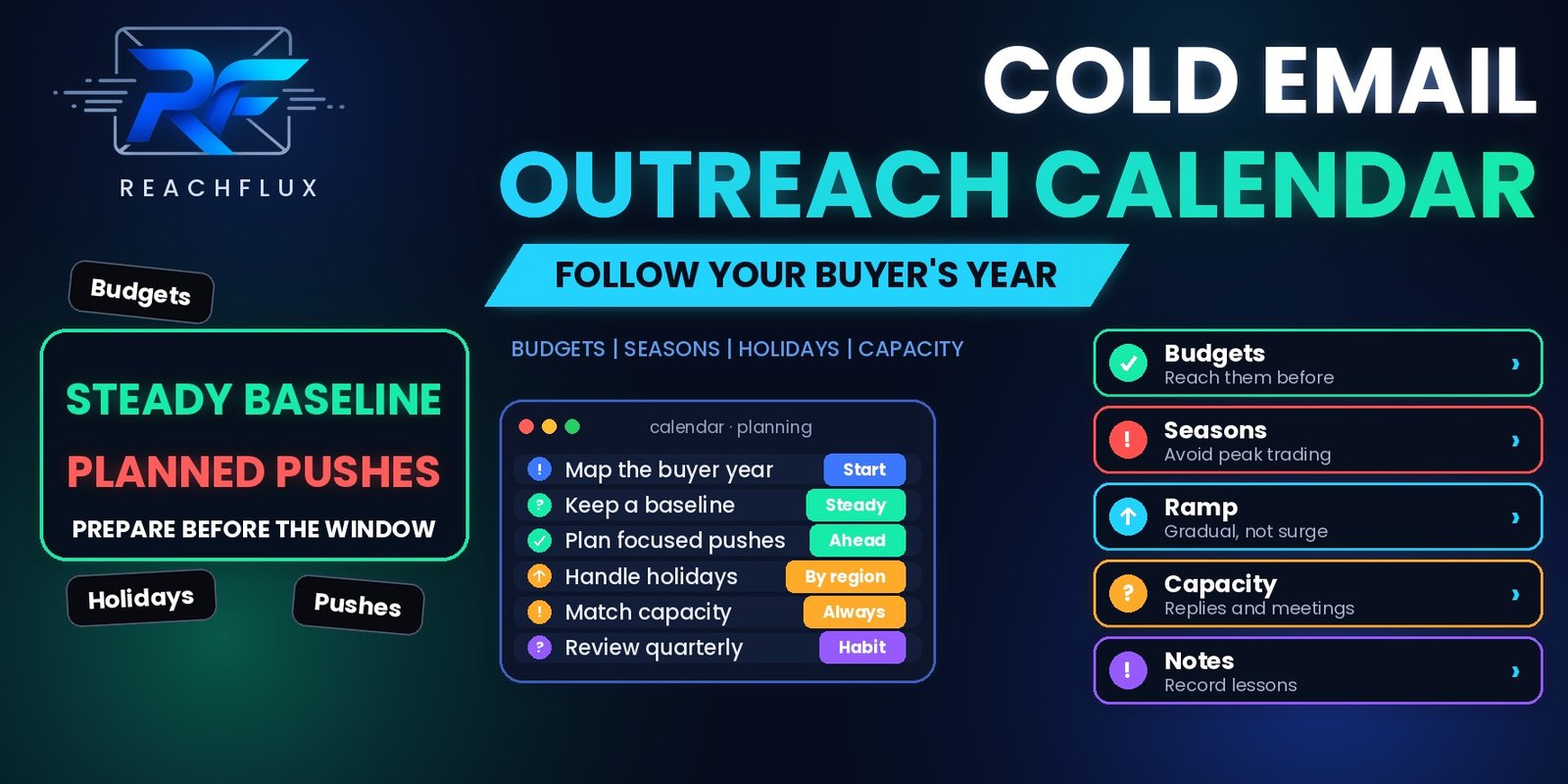
Plan outreach on a calendar that reflects when your buyers are able and likely to respond, not on a flat schedule. Map their buying cycles, budget periods, busy seasons and holidays, then place campaigns where attention is high and avoid periods where inboxes are quiet or buyers are overloaded. Keep a steady baseline of low-volume outreach so your domains stay active, and add focused pushes before the windows that matter.
A calendar also protects your infrastructure. Surges before a deadline, followed by silence, are a pattern that strains reputation. This guide shows how to build a simple outreach calendar, what to consider for different audiences, how to handle holidays and how to review the plan each quarter.
Start with your buyers’ year, not yours
| Factor | Question to ask | Example effect |
|---|---|---|
| Budget cycles | When do they set or spend budgets? | Outreach before budgets close is more timely than after |
| Busy seasons | When are they flat out? | Retail and hospitality buyers are hard to reach in peak trading |
| Planning windows | When do they choose suppliers? | Wholesale buyers plan ranges months ahead. See How to Email Retail Buyers and Stockists: A Wholesale Outreach Playbook for Ecommerce Brands |
| Holidays and events | When are they away or at trade shows? | Expect lower response around public holidays |
| Regulatory or reporting deadlines | What forces decisions? | Some sectors act around fixed dates |
Keep a steady baseline and add focused pushes
Sending nothing for weeks and then surging looks unusual to mailbox providers and leaves your pipeline lumpy. A better pattern is a modest, steady baseline of outreach all year, with planned increases ahead of the windows that matter. The increases should be gradual and within your capacity, as covered in Cold Email Capacity Calculator: How Many Domains and Inboxes You Need for Your Daily Volume.
Remember that a push needs preparation. Lists should be built and validated, domains ready and ramped, and replies staffed, before the window opens.
Handle holidays deliberately
Know the holidays in each region
Public holidays differ by country, and your list may span several. Group contacts by region and schedule accordingly.
Expect slower responses
Replies in holiday weeks are often fewer and later. Do not judge a campaign by a holiday week.
Avoid heavy follow-up pressure
A reminder landing as someone returns from leave can feel relentless. Space follow-ups sensibly. See Cold Email Follow-Up Timing: How Long Should You Wait Before Following Up?.
Use quiet periods for preparation
Build lists, test infrastructure and refresh data while response is low.
A sample calendar for a wholesale brand
Imagine a brand selling to independent retailers who plan their autumn and winter ranges in spring and early summer. This is an illustration, not a prediction for any real sector.
| Period | Focus | Why |
|---|---|---|
| Late winter | Research, list building, domain checks | Prepare before buyers start planning |
| Spring | Main outreach push to retailers planning ranges | Buyers are choosing suppliers |
| Early summer | Follow up with interested buyers and handle samples | Decisions are being finalised |
| Late summer to autumn | Light outreach, nurture and reorders | Retailers are busy trading |
| Year end | Pause new outreach, review results and refresh data | Attention is low, review is valuable |
Match the calendar to what you can handle
A calendar is only useful if you can deliver on it. A push that produces more replies than you can answer leaves leads cooling. Plan reply handling and meeting capacity alongside sending volume, using the handoff discipline in Cold Email Lead Handoff: How to Move Replies Into Your CRM and Pipeline Without Dropping Leads. It is better to run a smaller push well than a larger one badly.
A one-page planning worksheet
| Question | Your answer |
|---|---|
| When do my buyers set budgets? | Months and triggers |
| When are they busiest or away? | Peak trading, holidays, events |
| Which windows matter most? | The two or three periods to prepare for |
| What is my steady baseline volume? | Daily or weekly, within capacity |
| What must be ready before each push? | Lists, domains, ramp, reply handling |
| How will I judge success? | Meetings and qualified replies, not sends |
Fill it in once a quarter and keep the previous versions. Comparing them shows how your calendar and your results are changing.
Review the calendar every quarter
Each quarter, compare the plan with what happened. Which periods produced the best replies? Did holidays and busy seasons behave as expected? Were domains and mailboxes ready? Adjust next quarter’s plan, and record the lessons so the calendar improves each year. Over time your own data will tell you more than any general guidance, and it feeds the routine in Cold Email Operating Rhythm: Daily, Weekly and Monthly Routines for Managing Outreach at Scale.
Calendar mistakes that waste a good window
Starting too late
Lists, domains and ramp-up need weeks. A push that starts when the window opens is already behind.
Ignoring buyers’ busy periods
Outreach that lands in peak trading gets ignored.
Surging without ramping
Sudden volume strains reputation. See Cold Email Warm-Up Explained: What It Is, Whether You Need It and How to Do It Safely.
Forgetting regional differences
A global list with one schedule will miss regional holidays.
Not capturing what you learn
Without notes, each year starts from zero.
Outreach calendar checklist
- You know when your buyers set budgets, plan and are busiest.
- The calendar includes a steady baseline and planned pushes.
- Holidays are mapped by region, and contacts are grouped accordingly.
- Lists, domains and ramp-up are ready before each window.
- Reply handling and meeting capacity match planned volume.
- Follow-ups are spaced sensibly around holidays.
- Results are reviewed each quarter and the plan updated.
- Lessons are recorded for next year.
Questions about planning cold email by season
How do I plan a cold email calendar?
Map your buyers’ budget cycles, busy seasons, planning windows and holidays, keep a steady baseline of outreach and add focused pushes ahead of the windows that matter, within your capacity.
Should I avoid sending cold emails during holidays?
Responses are usually slower around holidays, so avoid heavy pressure and judge results accordingly. Use quiet periods for preparation, and group contacts by region.
What is the best month to send cold emails?
It depends on your buyers. Align campaigns with their planning and budget cycles rather than a generic best month.
How early should I prepare for a seasonal push?
Weeks ahead. Lists need building and validating, domains need ramping and reply handling needs staffing before the window opens.
Why avoid surges in cold email volume?
Sudden surges followed by silence strain sender reputation and make your pipeline lumpy. A steady baseline with gradual, planned increases is safer.
How often should I review my outreach calendar?
Quarterly, comparing the plan with results and recording lessons so next year’s calendar is better.
Follow your buyer’s calendar, and prepare before the window.
A good outreach calendar combines a steady baseline with well-prepared pushes timed to when buyers can act. Respect holidays, match capacity and review each quarter.
Done consistently, it makes results more predictable and keeps your infrastructure healthier.
Prepare lists, schedule paced sending and manage replies in one place.
ReachFlux processes campaigns in the background, with randomised delays and distribution across connected accounts.